Simple1 : 3-step deployment
Proven2,3,4
Fast Sealing5,6
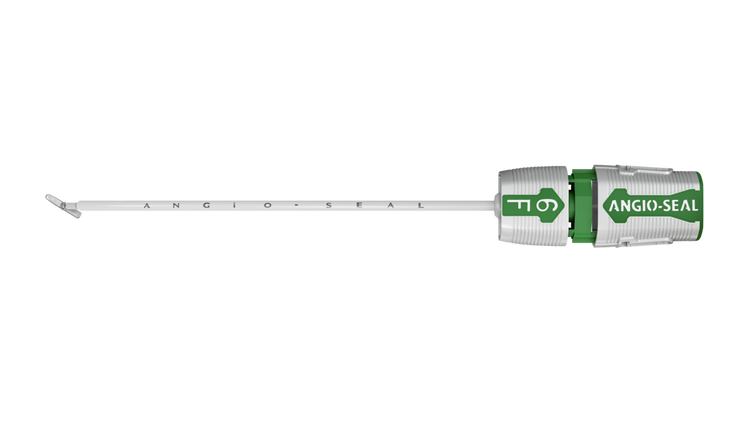
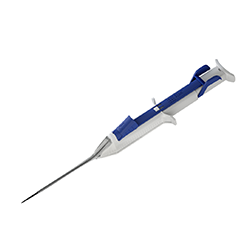
Angio-Seal™ VIP Vascular Closure Device is designed for sealing the common femoral arterial puncture site (lumen diameter greater than 4 mm) after diagnostic angiography or interventional procedures.
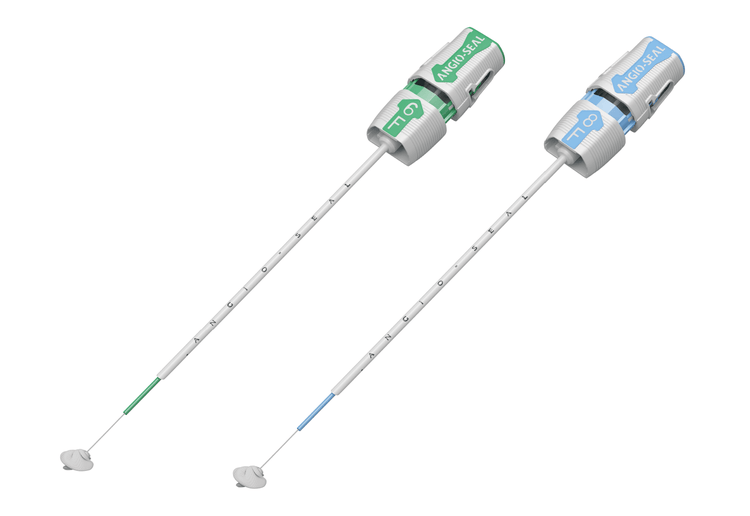
Angio-Seal™ VIP Vascular Closure Device is available in two sizes, providing flexibility for various femoral access procedures using
- an 8 French or smaller procedural sheath for the 8Fr Angio-Seal™ VIP device
- or a 6 French or smaller procedural sheath for the 6Fr Angio-Seal™ VIP device.
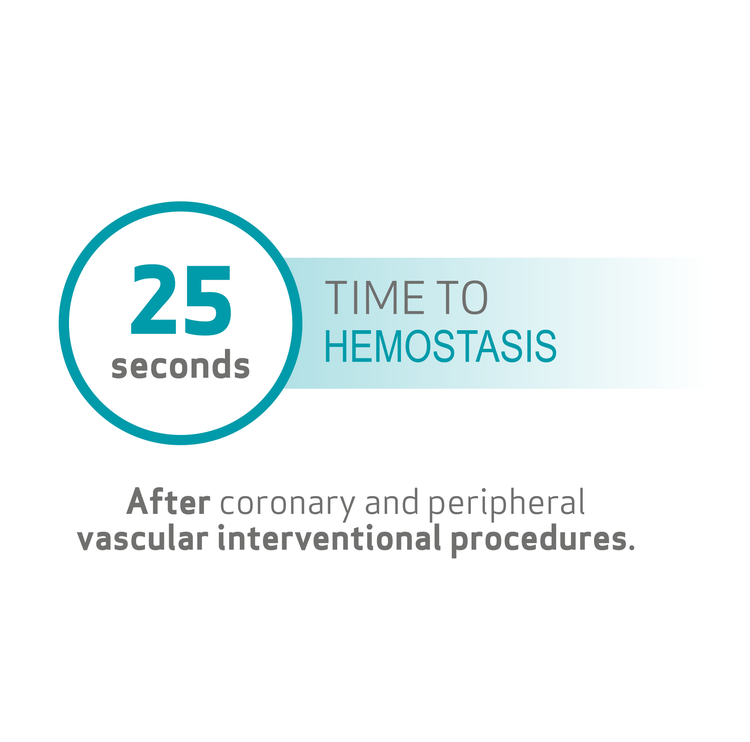
It is designed to help reduce time to hemostasis and to support early ambulation.
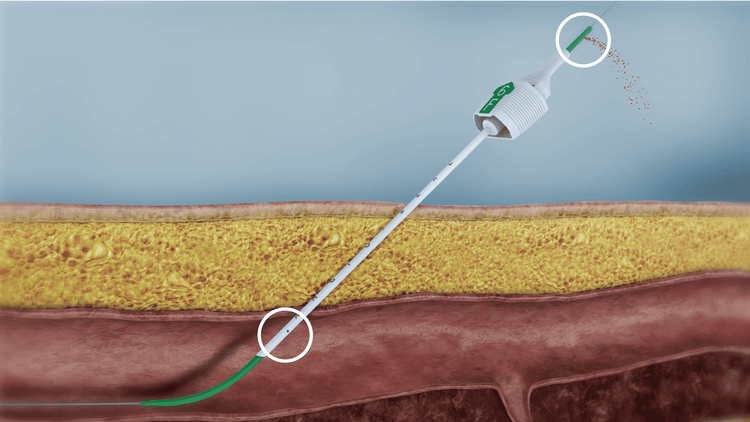
STEP 1 : LOCATE THE ARTERY*
- Insert the arteriotomy locator into the Angio-Seal™ VIP insertion sheath (arrow to arrow), so the two pieces snap together securely. Insert the Angio-Seal™ VIP guidewire into the procedural sheath, then remove the procedural sheath.
- Thread the Angio-Seal™ VIP assembly over the guidewire: when the tip of the insertion sheath is about 1.5 cm into the artery, blood will begin to flow from the drip hole in the locator.
*Assess the puncture site location by performing an angiogram.
STEP 1 : LOCATE THE ARTERY*
3. Confirm proper location by withdrawing the Angio-Seal™ VIP assembly until blood stops flowing from the drip hole, then advance the Angio-Seal™ VIP assembly again until blood begins to flow from the drip hole.
4. Thread the Angio-Seal™ VIP assembly over the guidewire: when the tip of the insertion sheath is about 1.5 cm into the artery, blood will begin to flow from the drip hole in the locator.
*Assess the puncture site location by performing an angiogram.
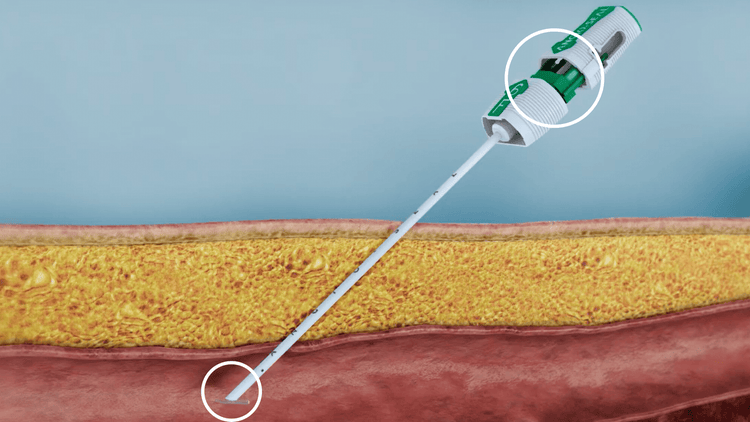
STEP 2 : SET THE ANCHOR
- To release the anchor: carefully grasp the Angio-Seal™ VIP device at the bypass tube and advance it in small increments in the sheath cap until they snap together (arrow to arrow).
- To set the anchor: holding the insertion sheath cap steady, grasp the device cap and slowly pull back until resistance from the anchor catching on the distal tip of the insertion sheath is felt. The device sleeve-colored bands should now be completely visible.
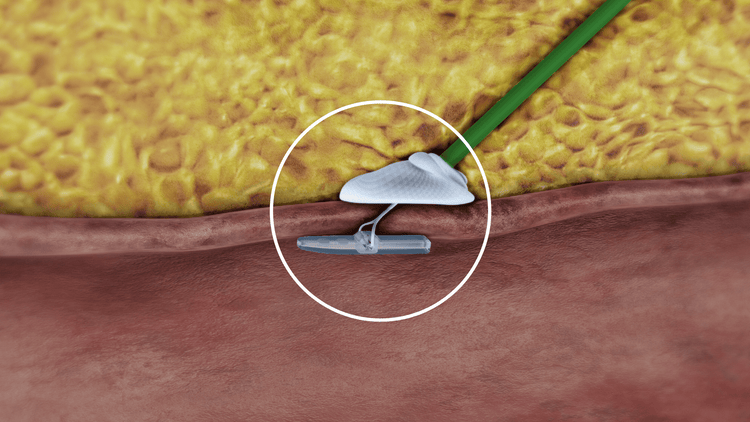
STEP 3: SEAL THE PUNCTURE
- Withdraw slowly the assembly along the angle of the puncture tract to position the anchor against the vessel wall. A resistance should be felt.
- Withdraw the assembly until all the suture has been deployed: a tamper tube will appear when the insertion sheath clears the skin, and a clear stop appears on the suture.
STEP 3: SEAL THE PUNCTURE
3. Advance the knot and collagen with the tamper tube, while maintaining tension on the suture. Hold the tamper tube on the knot for hemostasis. A complete seal is indicated when resistance is felt, and hemostasis is achieved. As a guide, in most cases a compaction marker will be revealed.
4. Cut the suture below the clear stop, then remove the tamper tube.
5. Gently pull up on the suture and cut the suture below skin level. Clean puncture site and apply a sterile dressing so that it can easily be observed during recovery.
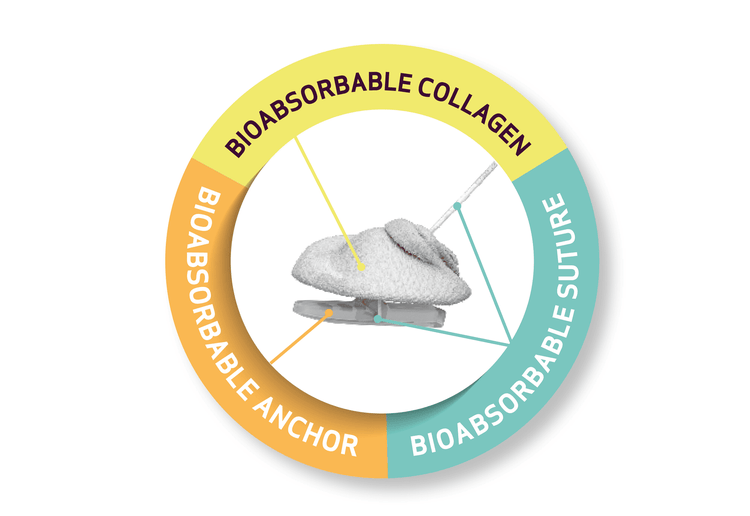
The Angio-Seal™ VIP Vascular Closure Device features three components designed for active arteriotomy closure at the femoral access site:
- Bioabsorbable anchor that is positioned on the inside of the artery
- Bioabsorbable collagen plug that seals the arteriotomy from the outside
- Bioabsorbable suture that holds the anchor and plug securely in place
Angio-Seal™ VIP is designed to support safe and effective femoral access site closure7:
- Complete bioabsorption – all components are fully resorbed within 90 days8
- Preserves arterial flow – no evidence of chronic scar tissue or inflammation8
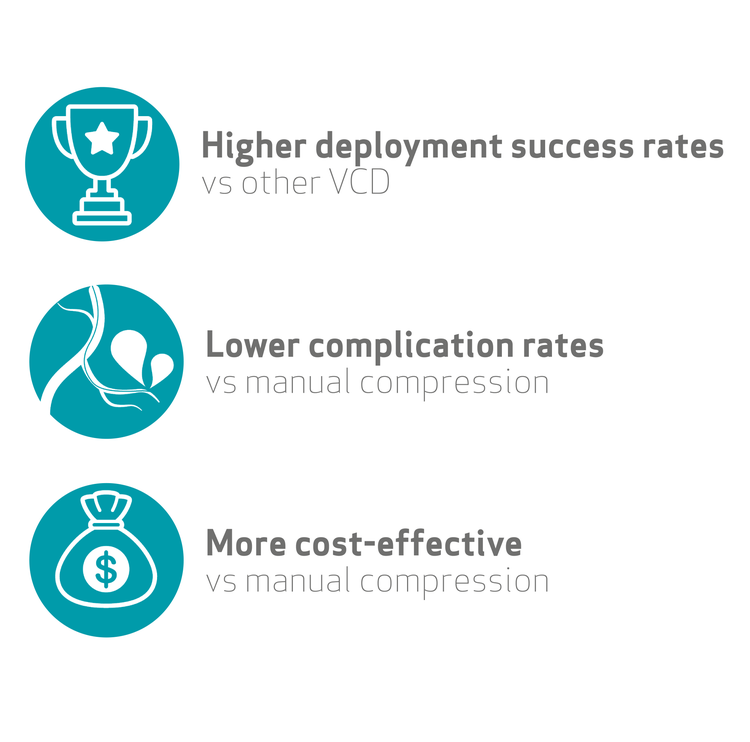
With over 20 years on the market and supported by numerous randomised clinical trials, the Angio-Seal™ VIP Vascular Closure Device has demonstrated:
- High deployment success rate9
- Safe and effective closure of the femoral access site7
- Lower complication rates compared with manual compression10 and other vascular closure devices2
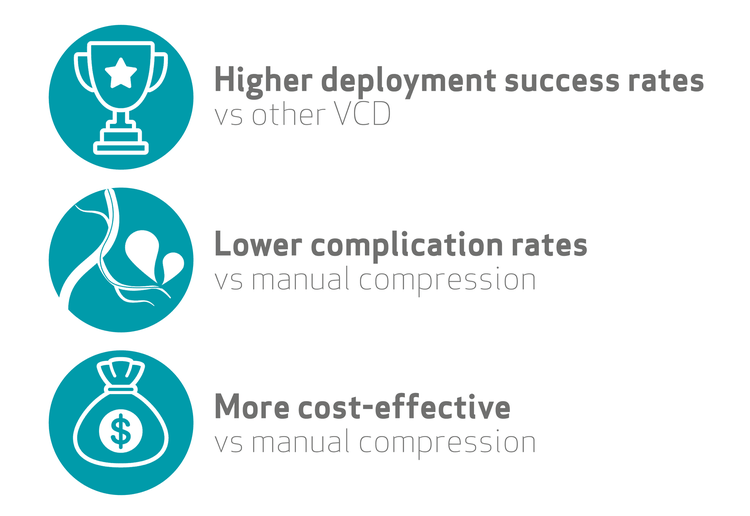
Compared with manual compression, the Angio-Seal™ VIP Vascular Closure Device significantly reduces:
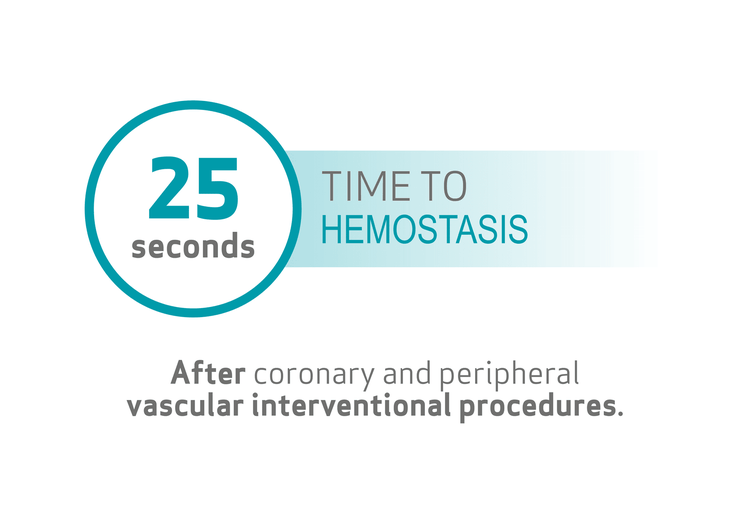
- Time to hemostasis5,6
- Time to ambulation5
- Time to discharge11
Downloads
References
Disclaimer
Not all products are available for sale in all countries. This information is provided only in respect to markets where these products are approved or cleared. Please contact your Terumo local sales representative for more information. Refer to Instructions for Use for contraindications, warnings, precautions and additional information. All brand names are trademarks or registered trademarks owned by TERUMO CORPORATION, its affiliates, or unrelated third parties.
Didn't find your product?
Consult our products in our Product Index