Machnik et al. Postepy Kardiol Interwencyjnej. 2017
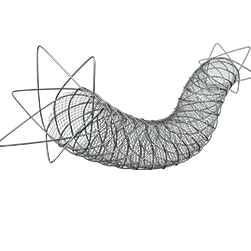
Featured product: Roadsaver™ Carotid Artery Stent
May 30, 2017
-
Retrospective, Single-arm, Single-centre (High-volume Polish centre)
-
41 non-consecutive CAS procedures (31 men & 9 women (67.8 ± 7.9) with >50% carotid artery stenosis
- 21 Symptomatic (51.2%): 18 ipsilateral-stroke (44%), 1 ipsilateral TIA (2.4%), 2 ipsilateral amaurosis fugax (4.8%) within 6 months of the procedure
- 20 Asymptomatic (high-risk) (48.7%)
-
One patient with severe, bilateral ICA stenosis underwent a sequential CAS procedure of both ICA.
-
Carotid stenosis grade was assessed on carotid DUS and subsequently verified by quantitative carotid angiography (QCA) just before CAS.
-
All patients on DAPT (aspirin 75 mg and clopidogrel 75 mg daily for at least 3 days before the procedure or loading doses of 300 mg of aspirin and clopidogrel the day before the procedure).
-
During CAS unfractionated heparin (100 IU/kg) was used.
-
Embolic protection device (EPD) use:
- 27 Proximal (66%)
- 14 distal (34%)
-
Direct stenting: 24 (58.5%) cases
-
Predilatation 17 (41.4%) cases
-
Postdilatation all (100%) cases
-
Patients were discharged 1–2 days after the procedure with the recommendation to take aspirin indefinitely and clopidogrel 75 mg for 3 months.
- In 4 patients with atrial fibrillation, vitamin K antagonists were continued after CAS.
-
Successful implantation: 100%
-
Carotid stenosis was reduced from 82.9 ± 9.1% (61-97%) to 19.3 ± 7.3% (0-33%) (p < 0.05)
-
Mean fluoroscopy time was 9.8 ± 1.1 (8.1–11.7) min
-
Mean procedure time:
- With proximal EPD: 26 ± 6 (18–32) min
- With distal EPD: 25 ± 2 (17–30) min
-
1 minor stroke before stent deployment
-
1 ipsilateral transient ischemic attack (TIA)
-
DUS at 24-48h post-procedure
- PSV: 1.1 ±0.4 m/s (0.5–2.1 m/s) vs 3.9 ±1.0 m/s (range: 2.0–7.0 m/s) pre-procedure (p < 0.05)
- EDV: 0.3 ±0.1 m/s (range: 0.17–0.6) vs 1.4 ±0.5 m/s (range: 0.85–3.5 m/s) pre-procedure (p < 0.05)
-
DUS at 30 days post-procedure
- PSV: 1.1 ±0.3 m/s (range: 0.7–2.7 m/s) vs 3.9 ±1.0 m/s (range: 2.0–7.0 m/s) pre-procedure (p < 0.05)
- EDV: 0.4 ±0.1 m/s (range: 0.2–0.6) vs 1.4 ±0.5 m/s (range: 0.85–3.5 m/s) pre-procedure (p < 0.05)
-
No stent thrombosis or significant In-Stent Restenosis occurred for up to 30 days.