Ierardi et al. Vascular and Interventional Radiology 2019
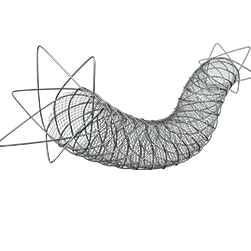
Featured product: Roadsaver™ Carotid Artery Stent
March 02, 2019
-
Retrospective, single arm, single center study
- CAS procedures performed between February 2017 and July 2018
-
13 patients (8 Men and 5 women (mean age: 75.8))
-
Symptomatic (≥50% by NASCET): 11
- 8 with Ipsilateral TIA or Amaurosis Fugax (within <6 months)
- 3 with ipsilateral strokes (within <6 months))
-
Asymptomatic (≥70% by NASCET & suitable for treatment): 2
-
-
7 lipidic (echoluscent) / 5 heterogenous lesions
-
All patients presented at least 1 anatomic and comorbid clinical criteria that potentially increased risk posed by surgery (as per the SAPHIRE study)
-
Exclusion criteria
- Carotid obstruction, previous stenting at the same site, acute stroke within last 30 days, myocardial infarction within 72 hours and intracranial hemorrhage within last 12 months.
-
Follow up at 12 months
-
Neurological examinations of all patients were performed before the intervention, by an independent neurologist using the National Institute of Health Stroke Scale (NIHSS)
-
Plaque morphology assessment by Doppler Ultrasound (DUS): categorizing all the plaques into lipidic (echoluscent), fibrotic (echogenic), and those with heterogenous texture (heterogenous plaque)
-
Each patient was on Dual antiplatelet therapy (DAPT; aspirin 100 mg and clopidogrel 75mg daily for at least 3 days before the procedures on loading doses of 300 mg of aspirin and clopidogrel the day before the procedure.
-
All patients received 3000 – 5000 units of intravenous heparin after the establishment of endovascular access.
-
Neurological examination was performed in all patients.
-
Carotid stenosis was revealed by Doppler ultrasound (DUS) and multidetector CT (MDCT) scan.
- 4 patients had a peak systolic velocity (PSV) between 130 and 150 cm/s (50-69% stenosis),
- 6 a PSV between 150 and 180 cm/s (70-79%),
- 3 a PSV > 180 cm/s (≥80% (severe) stenosis).
-
EPD was used in 12/13 patients (11 Filter Wire EZ & 1 Spider FX)
-
Direct stenting: 11 (84.6%) cases,
-
Predilatation: 2 (15.4%) cases
-
In all cases postdilatation was performed.
-
Stent patency was evaluated at 12-month follow-up.
-
Patients were discharged 1-2 days after the procedure with the recommendation to take aspirin indefinitely and clopidogrel 75 mg for 3 months.
-
Technical success (<30% residual stenosis): all (100%) cases.
- In 3 patients a nonsignificant residual stenosis <30% has been reported
-
No major complications during or after the procedure occurred
- 1 patient (7.7%) showed a transitory bradycardia during angioplasty
- 1 patient (7.7%) showed local bleeding at the puncture site
-
All the neurological examinations performed 24 h and 30 days after the procedure were negative
-
No significant ISR was registered up to 12 months
-
In 2 patients, < 30% ISR was revealed at DUS performed after 6 months and confirmed at 12 months
- In both patients contrast enhanced ultrasound (CEUS) and MDCT denied the presence of significant stenosis
- One of the two patients already had insignificant (<30%) residua stenosis on the post-procedural angiogram
-