First-in-man angiographic and OCT single arm assessment
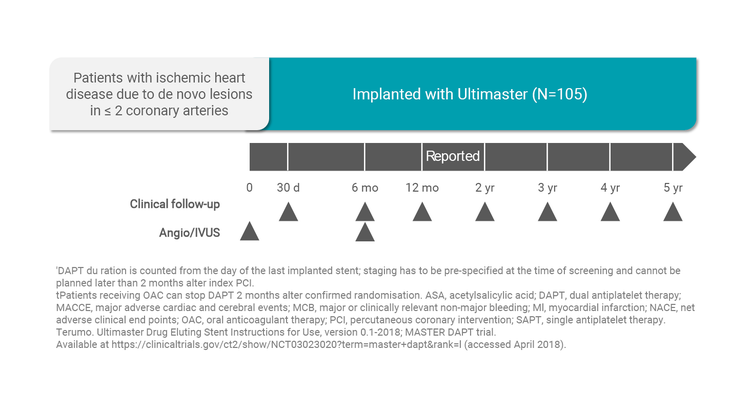
Prospective trial at 8 sites in Europe:
- Primary endpoint: late loss at 6 months
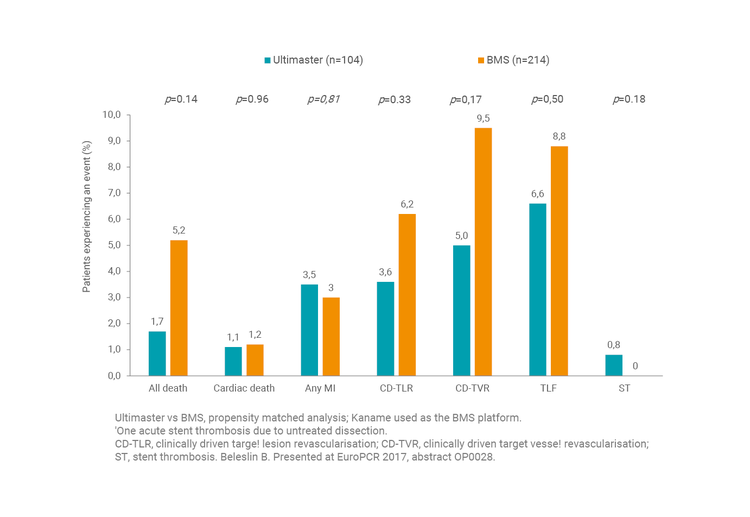
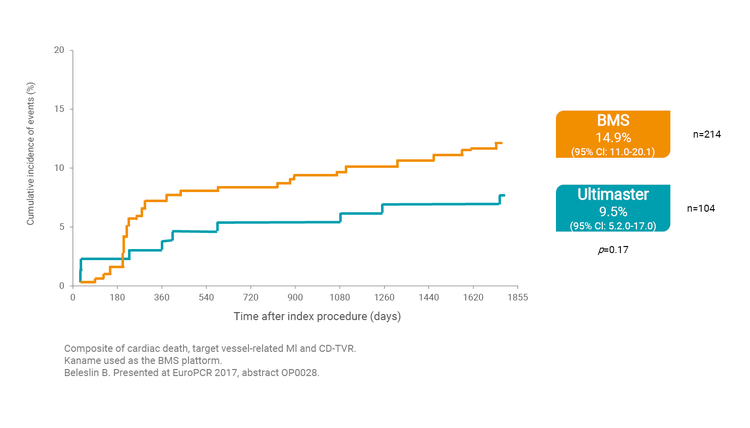
- Main secondary endpoints: TLF (cardiac death, TV-related MI, clinically indicated TLR), and stent thrombosis
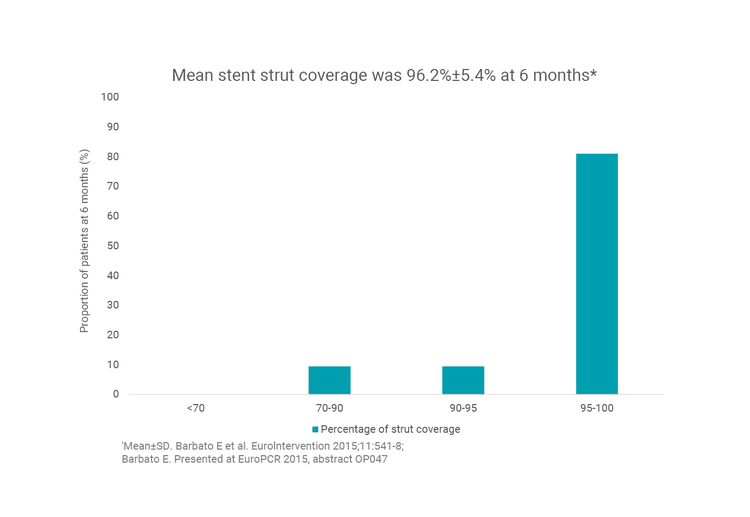
- Angio/IVUS: angiographic in-stent and in-segment binary restenosis rate; in-stent, in-segment, proximal, and distal MLD; IVUS-assessed neointimal hyperplasia volume and percentage volume obstruction; OCT-assessed stent strut coverage and malapposition
Stage: Published and completed
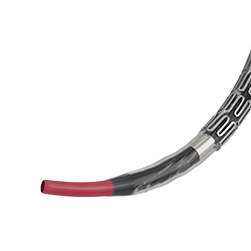
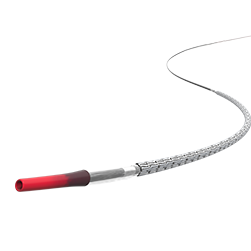
Featured products: Ultimaster™ Tansei™ Sirolimus Eluting Coronary Stent System, Ultimaster Nagomi™ Sirolimus Eluting Coronary Stent System
-
To investigate the 6-month angiographic and long-term clinical outcomes for Ultimaster
- Effect on arterial vessel wall assessed with sophisticated imaging techniques: IVUS and OCT
- Short- and long-term safety and efficacy evaluated by predefined endpoints
-
To compare the results for Ultimaster with data from a historical BMS cohort
IVUS, intravascular ultrasound; OCT, optical coherence tomography MI, myocardial infarction; MLD, minimal lumen diameter; TLR, target lesion revascularisation; TV, target vessel.
Barbato E et al. EuroIntervention 2015;11:541–8.
Beleslin B. Presented at EuroPCR 2017, abstract OP0028.
-
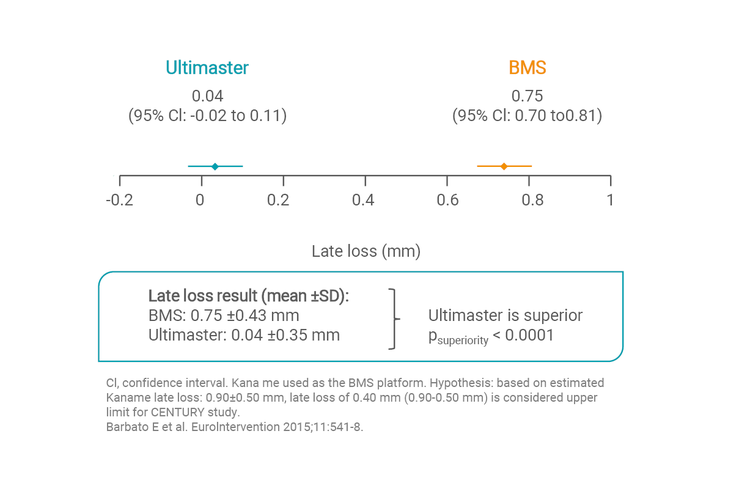
Ultimaster was superior to the BMS withrespect to in-stent late loss: achieving a 95% late loss reduction
-
IVUS and OCT data support the efficacy and safety profile of Ultimaster:
- Thin and homogeneous layer of neointima covered stent struts 6 months after implantation
- Average strut coverage rate of 96.2%
-
Rates of clinical events remained low with Ultimaster up to 5 years after implantation, with a low TLR rate, and just one acute ST reported due to untreated dissection
Barbato E. Presented at EuroPCR 2015, abstract OP047; Barbato E et al. EuroIntervention 2015;11:541–8; Beleslin B. Presented at EuroPCR 2017, abstract OP0028.