Machnik et al. Adv Interv Cardiol 2020
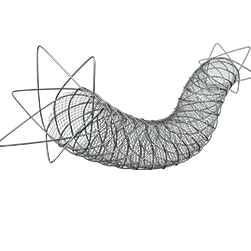
Featured product: Roadsaver™ Carotid Artery Stent
December 29, 2020
-
Retrospective, Single-arm, Single-center
- CAS procedures performed between 2014 and 2019 in a high-volume Polish centre
-
298 non-consecutive procedures (287 pts) (mean age: 70.5 ± 8.6; 203 men)
- 89 symptomatic cases (30%): 50% stenosis (by quantitative angiography) and with ipsilateral stoke and/or transient ischemic attack (TIA) within <6 months
- 209 high-risk stenosis (70%): by morphology: echolucent, highly lipidic, thrombus-containing, ulcerated, and “stringsign”
-
11 patients underwent a bilateral procedure
-
In each patient computed tomography (CT) cranial scan was performed as part of an independent pre-procedural evaluation
-
The severity of stenosis were evaluated by duplex ultrasonography (DUS: (peak systolic velocity (PSV) and end diastolic velocity (EDV)) and/or CT.
-
All patients were on high-dose statins and dual antiplatelet therapy (DAPT; aspirin 75 mg and clopidogrel 75 mg daily for at least 3 days before the procedure or loading doses of 300 mg of aspirin and clopidogrel on the day before the procedure).
-
During CAS unfractionated heparin (100 IU/kg) was administred
-
Atropine (1–2 mg i.v.) was administered just before stent implantation to avoid a severe baroreceptor response.
-
Access:
- Femoral (93.6%)
- Radial (right) (5.7% )
- Brachial (right) (0.7%)
-
Embolic protection device (EPD) use: 100%:
- Proximal (Mo.Ma): 40.2%
- Distal: 59.7%
-
Direct stenting was performed in 132 (44.2%) vs. 166 (55.7%) pre-dilatation
-
Post-dilation: 100%
-
Patients were discharged 1–2 days after procedure completion with the recommendation of continuation of aspirin, statin (indefinitely) and clopidogrel (for 3 months).
-
In 35 patients with atrial fibrillation vitamin K antagonists or novel oral anticoagulants (NOAC) were restarted after CAS.
-
Successful implantation: 100%
-
Carotid stenosis was reduced from 84.9 ± 9.9% (50–99%) to 11.0 ± 9.4% (0–33%) (p < 000.1).
-
DUS at 24-48h post-procedure:
- Mean PSV: 1.30 ± 0.35 vs 3.77 ± 1.70 m/s pre-procedure (p < 0.0001)
- Mean EDV: 0.31 ± 0.11 vs 1.32 ± 0.56 pre-procedure (p < 0.0001)
-
DUS at 30 days post-procedure
- Mean PSV: 1.20 ± 0.58
- Mean EDV: 0.34 ± 0.16
-
30-day complications (death & stroke) incidence
-
9 (3.0%)
- 1 in-hospital ipsilateral major stroke (0.34%)
- 3 in-hospital ipsilateral minor (NIHSS<5) ischemic strokes (1,01%)
- 2 deaths due to hemorhagic strokes (on day 9 in hospital (due to hyperperfusion syndrome) & on day 21 (post-discharge; due to an unknown cause) (0.67%)
- 3 ipsilateral minor strokes after discharge, within 30 days post-procedure (1.01%)
- 2 cases (0.67%) associated with in-stent thrombosis on day 5 and 14 post-procedure, 1 of which occuring in patient later diagnosed as clopidogrel resistant
-
-
DUS at 6 months post-procedure
- Mean PSV: 1.2 ± 0.4
- Mean EDV: 0.4 ± 0.10
-
DUS at 24 months post-procedure
- Mean PSV: 1.30 ± 0.4
- Mean EDV: 0.40 ± 0.10
-
DUS at 48 months post-procedure
- Mean PSV: 1.35 ± 0.35
- Mean EDV: 0.40 ± 0.10
-
4-year Kaplan Meier event-free survival curve estimates
-
Overall survival 82%
- 77% in Ax and 97% Sx (p = 0.076)
- 2 patients died due to an ischemic stroke (at 33 and 37 months)
-
Stroke-free survival was 89%
- Ax 84% vs. Sx 98% (p = 0.187)
-
7 patients (2.3%) developed > 50% In-Stent Restenosis (ISR) between 5 and 12 months post-porecedure
- 4 underwent successful angioplasty using drug-eluting balloon
- 2 cases required self-expandable drug-eluting stent implantation
- 1 patient was left on best medical treatment after a failed revascularization attempt due to a problem with vascular access (Leriche syndrome and unsuccessful radial/brachial access attempt)
-