Balloon-Occluded Transcatheter Arterial Chemoembolization (b-TACE) for Hepatocellular Carcinoma Performed with Polyethylene-Glycol Epirubicin-Loaded Drug-Eluting Embolics: Safety and Preliminary Results
2
neutrals-100
Pierleone Lucatelli et al. CVIR(2019)
Featured product: Occlusafe™ Temporary Occlusion Balloon Microcatheter
March 06, 2019
neutrals-100
true
false
Background
Background
Objective
Objective
Methods
Methods
Results
Results
Limitation
Limitations
Conclusion
Conclusion
KeyTakeaway
Key Takeaway
Background
3
neutrals-100
pd-y-0
The combination of DEM-TACE with the b-TACE may improve the oncological response in HCC and the choice of a different delivery system will provide the Interventional Oncologist with another opportunity to further address the specific needs of every single patient, in line with the modern concept of individualized medicine.
neutrals-100
Objective
3
To report technical success, safety profile and oncological results of balloon-occluded transcatheter arterial chemoembolization using a balloon micro-catheter and epirubicin-loaded polyethylene-glycol (PEG) microsphere in HCC
neutrals-100
Methods
3
- Single-centre, single-arm, retrospective study with 6-month follow-up
- 22 patients (Child–Pugh A 68% [15/22], B in 32% [7/22]; age 67.05 ± 14 years) with 29 HCC were treated in 24 procedures.
- Technical success is defined: ability to place the balloon micro-catheter within the required vascular segment, balloon-occluded arterial stump pressure drops and assessment of microsphere deposition.
- Laboratory assessment pre/post-procedural and complications were analysed, respectively, according to CTCAEv5 and CIRSE system. Postembolization syndrome (PES) was defined as fever and/or nausea and/or pain onset.
- Oncological results were evaluated using m-RECIST criteria with CT/MRI imaging at 1 and 3–6 months.
neutrals-100
Results
3
Pierleone Lucatelli et al registry demonstrated:
Technical success:
- Pre-planned feeder was reached in all cases.
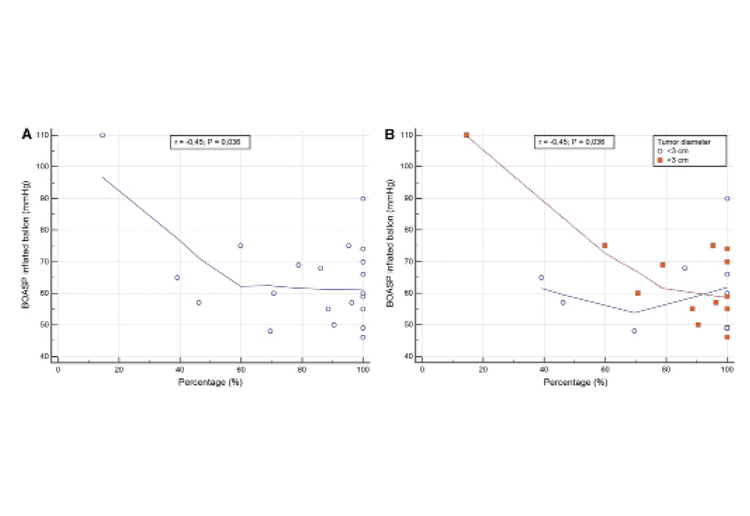
- Pressure drop average was 51.1 ± 21.6 mmHg.
- Exclusive target embolization was achieved in 14/24 procedures (58.3%).
Safety:
- Laboratory test modifications were all grade 1.
- 4/24 adverse events occurred (17%): pseudo-aneurysm of the feeder (grade 3), liver abscess (grade 2) and 2 asymptomatic segmentary biliary tree dilatations (grade 2).
- Post-embolisation syndrome PES occurred in 8/24 (33%).
Efficacy:
- The complete response at 1 and 3–6 months was 44.8% (13/29) and 52.9% (9/17)
- The partial response at 1 and 3–6 months was 55% (16/29) and 23.5% (16/29)
neutrals-100
- Nine patients (37.5%) received a second treatment and two of them (22.2%) went on to a third treatment without worsening of the liver function.
- All 24 patients were candidates for multimodal treatment after B-DEM-TACE due to the lack of hepatic injury. `
neutrals-100
Limitations:
3
neutrals-100
- Due to the lack of data on the b-TACE performed with DEM, the comparison with the existing literature is influenced by several causes of bias: use of lipiodol, different drugs and population characteristics (e.g. number and dimension of treated tumours).
- The small sample size sample size (22 patients) and the nonrandomized nature of this series.
neutrals-100
Conclusion
3
neutrals-100
Pierleone Lucatelli et al concluded that Epirubicin-loaded PEG microsphere b-TACE is technically feasible, safe and effective procedure for HCC treatment.
neutrals-100
Key Takeaway:
3
neutrals-100
The main findings of Pierleone Lucatelli et al are that:
- Epirubicin-loaded PEG microsphere b-TACE is technically feasible, safe and effective procedure for HCC treatment.
- The combination of b-TACE and DEM was safe and obtained Satisfactory complete response rates CR, at 1 and 3–6 months,
- Despite the initial complexity added to the procedure by the presence of the balloon micro-catheter and the different catheter manipulation technique, the operators were able to position and inflate the balloon micro-catheter in the selected vascular segment in all cases.
neutrals-100
Use/Indications
4
neutrals-100
- European Economic Area Indications for use of Occlusafe™ Temporary Occlusion Balloon Catheter
- Occlusafe™ is intended to be used for gaining temporary occlusion in the peripheral vasculature. The Occlusafe™ provides temporary vascular occlusion which is useful in selectively stopping or controlling blood flow
- Occlusafe™ is not available for sale in all countries. This information is provided only in respect to markets where this product is approved or cleared
- Occlusafe™ is manufactured by Terumo Clinical Supply Co., Ltd. and exclusively distributed by Terumo Europe NV in the EMEA region. All brand names are trademarks or registered trademarks of TERUMO CORPORATION and their respective owners. Scientific and clinical data related to this document are on file at Terumo Clinical Supply Co., Ltd. Refer to Instructions for Use for additional information.
This literature summary is not a systemic review. It is only an example of Occlusafe™ Temporary Occlusion Balloon Catheter related literatures.
©2021 TERUMO CLINICAL SUPPLY CO., LTD. CE0344
Manufacturer
TERUMO CLINICAL SUPPLY CO., LTD.
3 Kawashima-Takehayamachi
Kakamigahara Gifu, Japan 501-6024
Tel: +81(0)3-6742-8770
Distributor
Terumo Europe N.V.
Interleuvenlaan 40
3001 Leuven Belgium
Tel: +32 16 38 12 11
neutrals-100
Featured products
3
default-carousel
default-carousel
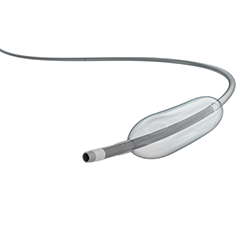
Occlusafe™
Temporary Occlusion Balloon Microcatheter