Smits PC et al. Circulation 2021
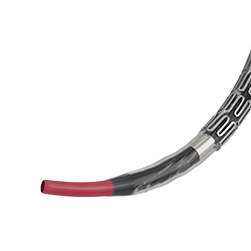
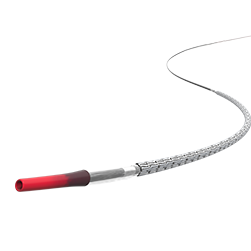
Featured products: Ultimaster™ Tansei™ Sirolimus Eluting Coronary Stent System, Ultimaster Nagomi™ Sirolimus Eluting Coronary Stent System
A considerable proportion of patients at high bleeding risk who undergo drug-eluting stent (DES) implantation are indicated for oral anticoagulation (OAC); however, the optimal duration of antiplatelet therapy after such procedures is yet to be established, especially in combination with OAC.
MASTER DAPT (MAnagement of high bleeding risk patients post bioresorbable polymer coated STEnt implantation with an abbReviated versus prolonged DAPT regimen) was an investigator‑initiated, randomised, open‑label trial conducted in patients at high bleeding risk after the implantation of an Ultimaster™/Ultimaster™ Tansei™ DES. The trial compared abbreviated (1 month) dual antiplatelet therapy (DAPT) with non-abbreviated (3–12 months) DAPT.
The MASTER DAPT trial recruited patients at high bleeding risk regardless of clinical presentation, and is valuable to inform clinical practice.
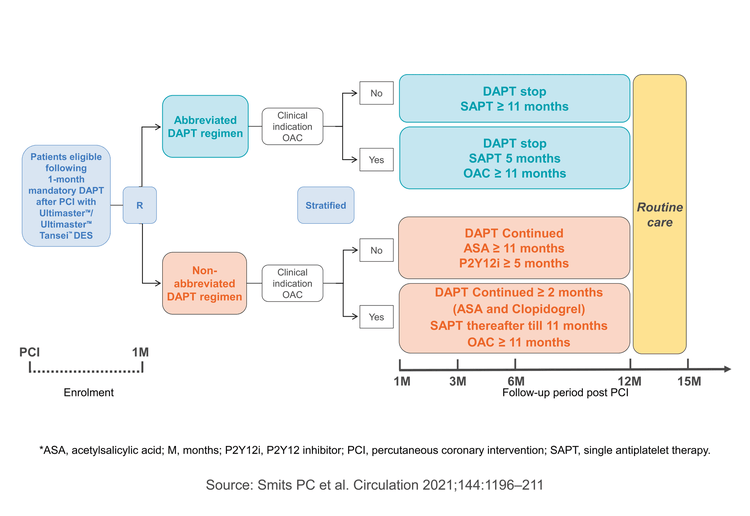
Three co-primary outcomes were assessed:
- Net adverse clinical events (NACE) – a composite of death from any cause, myocardial infarction (MI), stroke, and type 3 or 5 bleeding according to the Bleeding Academic Research Consortium (BARC).
- Major adverse cardiac and cerebral events (MACCE) – a composite of death from any cause, MI, and stroke.
- Major or clinically relevant nonmajor bleeding (MCB) – a composite of BARC bleeding type 2, 3, or 5.
Overall, baseline characteristics were similar between groups. Mean age was 76 years, and most (84.2%) of the patients in the OAC group had atrial fibrillation. Of those receiving OAC, 64.9% received a novel oral anticoagulant, and 33.5% a vitamin K antagonist, largely in combination with clopidogrel (98.8%) in the abbreviated DAPT group or acetylsalicylic acid plus clopidogrel (97.4%) in the non-abbreviated DAPT group.
Adherence to the allocated antiplatelet regimen decreased over time and was lower in the abbreviated versus non-abbreviated DAPT arm at 12 months in the OAC group (82.7% vs 95.8%; p<0.001). Clinical outcomes at 12 months are shown in Figure 2:
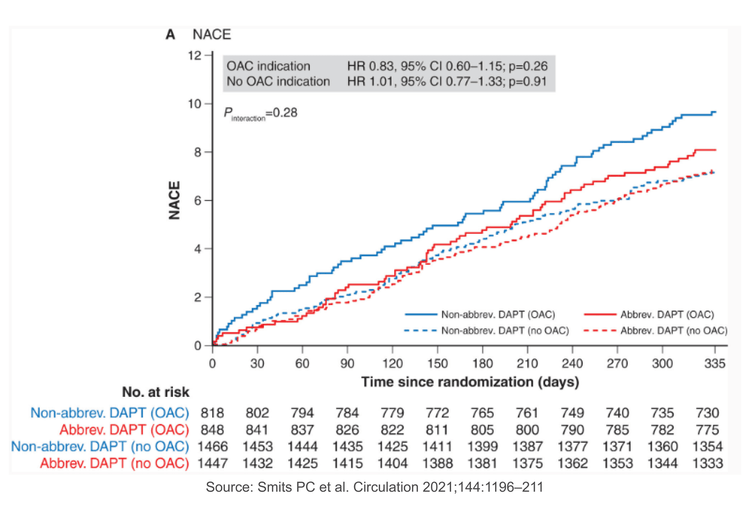
– NACE did not differ between patients who received abbreviated and non-abbreviated DAPT
- OAC group: 8.0% versus 9.6%, respectively; hazard ratio (HR): 0.83 (95% confidence interval [CI]: 0.60–1.15); p=0.26
- No OAC group: 7.2% versus 7.1%, respectively; HR: 1.01 (95% CI: 0.77–1.33); p=0.91 (Figure 2A)
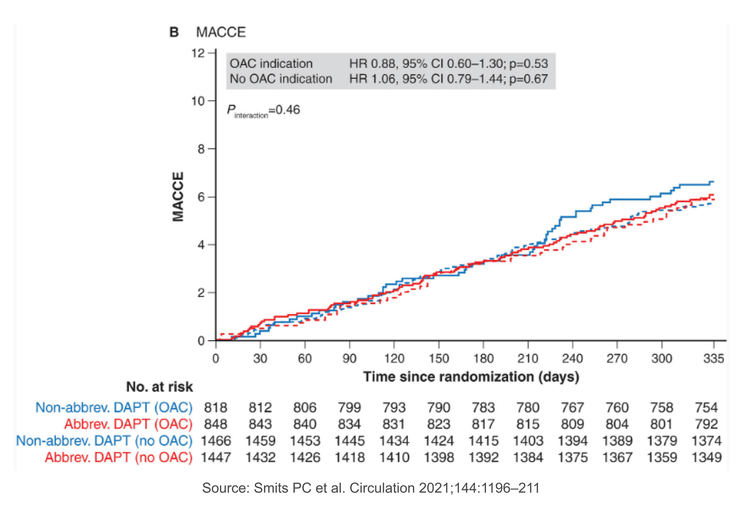
– MACCE did not differ between patients who received abbreviated and non-abbreviated DAPT
- OAC group: 5.9% versus 6.7%, respectively; HR: 0.88 (95% CI: 0.60–1.30); p=0.53
- No OAC group: 6.1% versus 5.7%, respectively; HR: 1.06 (95% CI: 0.79–1.44); p=0.67 (Figure 2B)
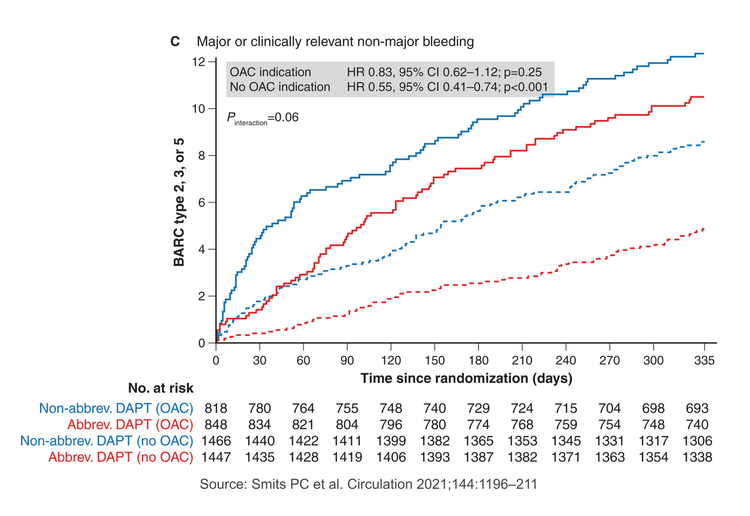
– BARC 2, 3, or 5 bleeding
- OAC group: there were numerical differences between patients who received abbreviated and non-abbreviated DAPT (9.9% vs 11.7%, respectively; HR: 0.83 [95% CI: 0.62–1.12]; p=0.25)
- No OAC group: bleeding events were significantly reduced among patients who received abbreviated DAPT versus nonabbreviated DAPT (4.6% vs 8.1%, respectively; HR: 0.55 [95% CI: 0.41–0.74]; p<0.001) (Figure 2C).