Arnold D. et al. - ESMO Open - Published online Feb 15, 2025.
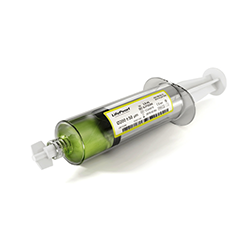
Featured product: LifePearl™ Drug Elutable Microspheres
In colorectal cancer liver metastases, Irinotecan-TACE has the potential to be used as either salvage therapy to achieve tumor control or as post-inductive/consolidation therapy, combined with systemic therapy or thermal ablation.
CIREL provides a pan-European perspective on the use of Irinotecan-TACE in routine clinical practice, reporting data on both treatment characteristics and clinical outcomes.
-
Multi-center, prospective cohort study, enrolling patients from 20 centers in 11 European countries, from February 2018 to August 2020
-
Adult patients with histologically confirmed colorectal cancer liver metastases, treated at least once with Irinotecan-TACE, using LifePearl™ microspheres
-
Primary endpoint: Observed usage of Irinotecan-TACE, categorized as salvage therapy or postinductive/consolidation therapy
-
Secondary outcomes:
- Tumor response assessed via RECIST v1.1 at baseline, follow-up 1 (0.5-2.5 months) and follow-up 2 (2.7-6.9 months)
- Overall survival (OS)
- Health-related quality of life (HRQoL), assessed through EORTC QLQ-C30 at baseline and 0.5-3.6 months follow-up
- Predictors for OS and (hepatic) progression-free survival (hPFS/PFS), estimated via multivariable Cox proportional hazards regression analyses
Baseline characteristics
- 152 patients, 61.2% males, with a median age of 66 years (range 37-90) were enrolled. Median
- follow-up was 22.8 months (95%CI 19.0-27.8 months)
- The total number of lesions was 1 in 15.8%, 2-3 in 30.3%, 4-10 in 34.9% and >10 in 19.1% of patients
- Treatment intention was salvage therapy in 57.2%, while 42.8% was post-inductive/consolidation therapy*
A multivariable Cox proportional hazards regression analysis identified some predictors of OS:
• ECOG performance status, 2 prior lines of systemic therapy and lesion size of > 50 mm as negative predictors for OS
• Incomplete treatment plans as a negative predictor for OS and hPFS, but not for PFS
• >50% liver involvement, and the presence of progressive extrahepatic metastases, unlike the presence of extrahepatic metastases in general, as negative predictors for OS and (h)PFS
• Overall HRQoL was stable in 52% and improved in 14% of patients, deteriorated in 34% of the patients
• Certain symptoms, including pain, nausea and vomiting, fatigue, and appetite loss, showed significant deterioration
• However, other symptoms such as constipation, diarrhea, dyspnea, insomnia, and financial difficulties did not exhibit significant deterioration
Irinotecan-TACE is not only used as salvage therapy, but also frequently as post-inductive/consolidation therapy in European clinical practice. Effectiveness data indicate a relatively long OS in the salvage setting, and promising results in the post-inductive/consolidation setting, along with a stable overall HRQoL.
Study limitations include a high number of missing data points, the lack of control group, and the potential for unaccounted confounding factors.
- Irinotecan-TACE shows promising results on OS and tumor response in colorectal cancer liver metastases, both in the salvage setting and in combination with systemic therapy and ablation
- HRQoL is largely maintained during follow-up, in line with the minimally invasive nature of the procedure
- Irinotecan-TACE could be integrated further into systemic treatment pathways