Randomized Comparison Between Radial and Femoral Large-Bore Access for Complex Percutaneous Coronary Intervention
2
neutrals-100

Meijers, T.A. et al. J Am Coll Cardiol Intv. 2021;(12):1293-303.

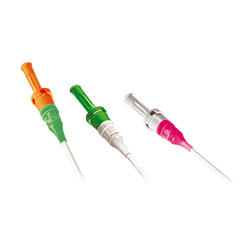
Featured products: Glidesheath Slender™ Introducer
neutrals-100
true
s1
Background
s2
Objective
s3
Methods
s4
Procedural complexity of coronary interventions
s5
Primary endpoint results
s6
Secondary endpoints results
s7
Conclusion
s8
References
​Background
3
neutrals-100
The femoral artery is currently the most applied access site for PCI of complex coronary lesions, especially when large-bore guiding catheters are required. With downsizing of transradial (TR) equipment (for example the thin-walled radial introducer sheath Glidesheath Slender™), TR PCI may be increasingly applied in these patients and might be a safer alternative compared with the transfemoral (TF) approach.
neutrals-100
Objective
3
neutrals-100
The aim of this study was to investigate whether TR PCI with Glidesheath Slender™ is superior to TF PCI in complex coronary lesions with respect to clinically relevant access site–related bleeding or vascular complications.
neutrals-100
Methods
3
neutrals-100
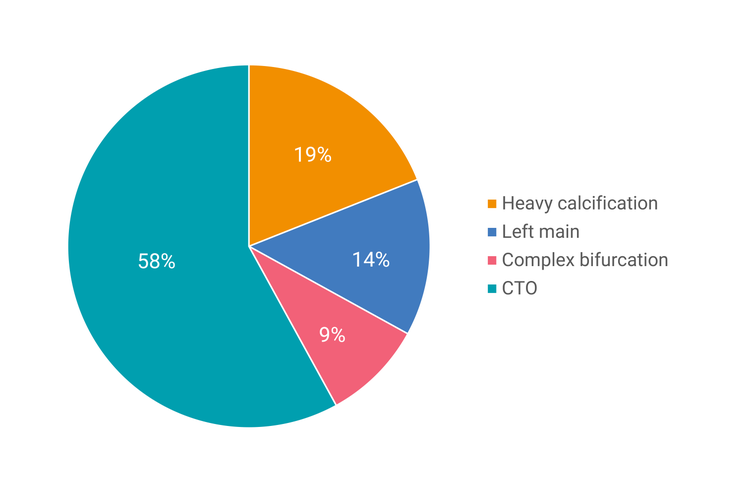
An investigator-initiated, international prospective multicenter trial was conducted, randomizing 388 patients with planned PCI for complex coronary lesions, including chronic total occlusion, left main, heavy calcification, or complex bifurcation, to either 7 Fr Transradial access (TRA) with Glidesheath Slender™ or regular 7 Fr Transfemoral access (TFA).
neutrals-100
Procedural complexity of coronary interventions
3
neutrals-100
false

The primary endpoint was defined as clinically relevant access site-related bleeding or vascular complications requiring intervention of the randomized access site during hospitalization. Bleeding was classified according to the Bleeding Academic Research Consortium (BARC) criteria and considered clinically relevant when the score was 2, 3, or 5.

As secondary endpoints TR and TF large-bore access were compared with regards to

1. Procedure-related parameters:

    • Procedural success*
    • Procedural time
    • Fluoroscopy time and contrast volume use
    • Cross-over rate

2. Bleeding or vascular complications not related to the access site

3. Major adverse cardiovascular events (MACE)**

neutrals-100
Primary endpoint results
3
neutrals-100
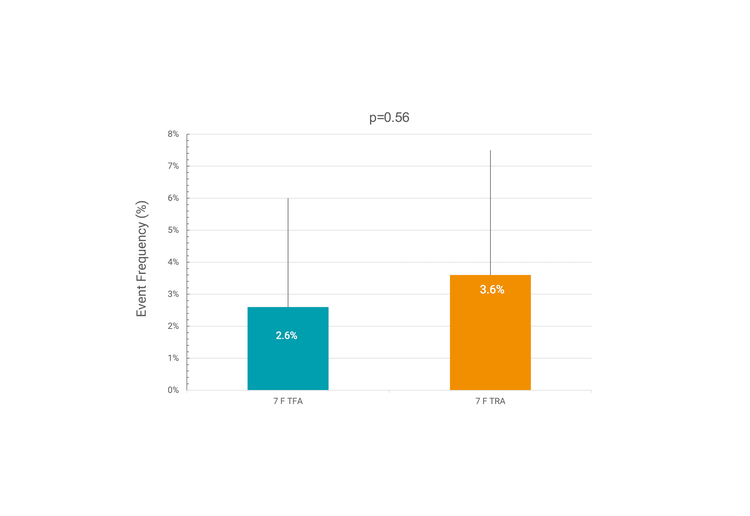
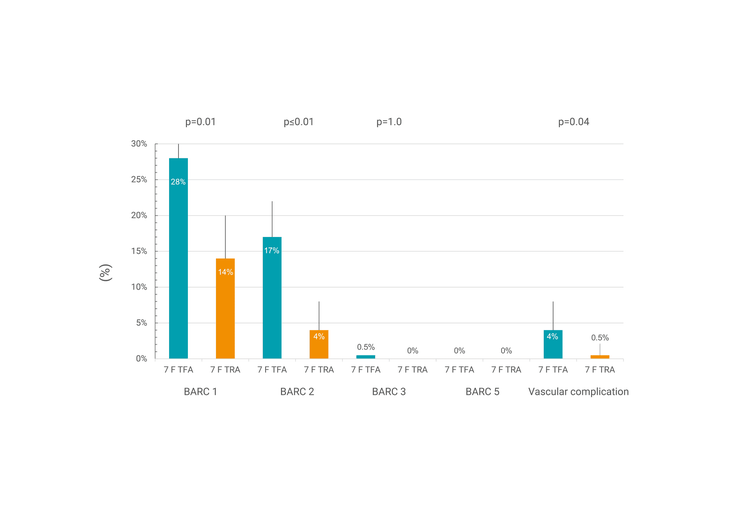
  • The occurrence of access site-related bleeding or vascular complications at discharge was significantly lower for radial access.
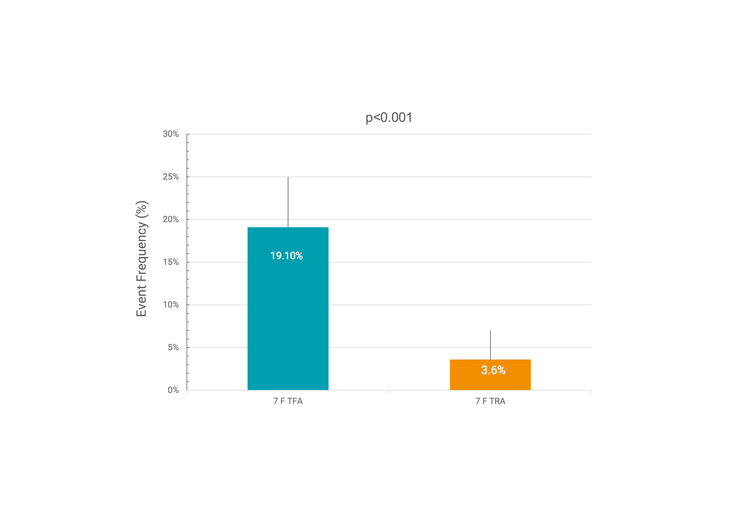
neutrals-100
BARC 2, 3 or 5 bleeding or vascular complication requiring intervention of the randomized access site
  • The occurrence of BARC 2 bleeding or vascular complications were significantly lower for radial access.
neutrals-100
Bleeding or vascular complication requiring intervention by category
Secondary endpoints results
3
neutrals-100
  • There was no difference between TFA and TRA with regards to procedural duration, contrast volume, or radiation dose.
neutrals-100
  • Values are n (%) or mean ± SD
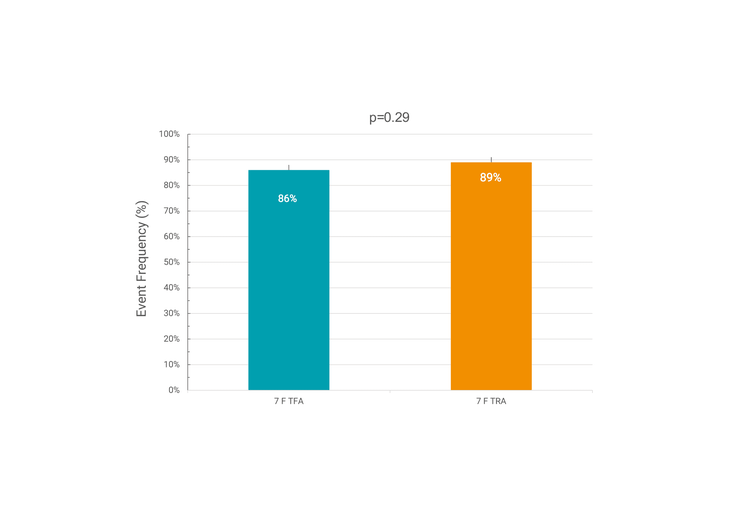
  • Procedural success and cross-over rates were not different between TFA and TRA.
neutrals-100
Procedural success
Crossover Rate
  • Both combined MACE and its individual components did not reach statistical significance at discharge and 30-day follow.
neutrals-100
Conclusion
3
neutrals-100

The COLOR Trial is the first randomized controlled trial that provides information on the use of radial access for complex PCI lesions requiring large bore access.

The results show that radial access with 7Fr Glidesheath Slender™ is associated with lower access site-related bleeding and vascular complications in complex PCI patients, without compromising procedural success and other efficacy parameters. Based on these findings, radial access should be strongly considered in all suitable patients requiring complex PCI.

However femoral access will not be completely abandoned. Further studies are required to reduce large-bore TF access site related complications, for example with the focus on the role of ultrasound guided puncture.

Slender technology allows performing complex procedures through radial access, allowing operators to use regular guiding catheters, that can be used in nearly all patients.

neutrals-100
Read full publication
https://www.sciencedirect.com/science/article/abs/pii/S1936879821005136
tisPrimary

References

text
BARC: Bleeding Academic Research Consortium
text
CTO: Chronic Total Occlusion.
text
DAP: dose-area product
text
MACE: defined as composite of death, MI and repeat revascularization of the target vessel during hospitalization and at 30 days.
text
TIMI: Thrombolysis In Myocardial Infarction
text
TRA: Transradial access
text
TFA: Transfemoral access
text
*Procedural success defined as successful PCI of the target lesion with a residual stenosis of <20%, without in-hospital MACE.
text
**MACE defined as composite of death, Myocardial infarction and repeat revascularization of the target vessel during hospitalization and at 30 days.
Featured products
3
neutrals-100